How the Federal EV Tax Credit Affected US Auto Sales in Late 2025
Background: What Was the Federal EV Tax Credit?
The Federal Electric Vehicle (EV) Tax Credit was a significant incentive program that offered buyers up to $7,500 in tax savings when purchasing qualifying electric vehicles. Introduced to accelerate the adoption of clean transportation, this credit reduced the overall cost of EVs, making them more accessible for American consumers. Eligibility required that the vehicle be new, meet certain battery capacity requirements, and be manufactured by companies that hadn’t exceeded a sales cap set by the government.
Over the years, this credit played a pivotal role in increasing EV sales across the country. Buyers could claim the credit against their federal income tax liability, making it an attractive benefit for environmentally conscious and tech-savvy consumers. The program also helped automakers expand their EV lineups and production capabilities by stimulating market demand.
US Auto Market Before September 2025
Before the tax credit expiration, EV adoption in the US was steadily increasing. By early 2025, electric vehicles accounted for nearly 10% of all new car sales, with hybrids filling a complementary role. The automotive market was in transition, as consumers balanced the growing availability of fully electric models with range anxiety and charging infrastructure concerns.
Consumer sentiment remained favorable toward EVs because the tax credit mitigated high initial prices, making electric options financially viable compared to traditional internal combustion engine (ICE) vehicles. The credit was a key selling point in marketing campaigns and dealer negotiations, demonstrating its importance in shaping buyers’ decisions.
The Surge: Q3 2025 EV Sales Spike Ahead of Expiration
As the September 30 deadline approached, the electric vehicle market experienced a surge unlike any before. In Q3 2025, EV sales in the US skyrocketed to 438,000 units—a record quarterly high representing a 30% increase year-over-year. This rush was driven by consumers eager to lock in the $7,500 federal tax credit before it expired.
Tesla dominated this period, commanding approximately 41% of the market share, followed by automakers like General Motors and Ford that heavily marketed their qualifying EV models. Dealers doubled down with incentives, offering an average of $9,000 in additional discounts and financing deals to expedite sales. This buying frenzy not only boosted revenue but strained dealer inventories, creating unique supply challenges.
Consumers showed urgency, using a mix of new purchases and leases, often negotiating aggressively to make transactions before the federal cut-off date. Manufacturers and retailers viewed this period as a windfall while bracing for a sharp sales drop once the credit ended.
Mechanics of the Tax Credit Expiration
The expiration of the Federal EV Tax Credit was a consequence of the One Big Beautiful Bill Act, which included provisions limiting eligibility based on income, vehicle MSRP caps, and a firm cutoff date of September 30, 2025. To qualify for the credit, buyers had to both place an order and complete their purchase before the deadline.
Higher-income individuals were phased out of eligibility, and vehicles priced above $55,000 for sedans or $80,000 for SUVs and trucks were no longer eligible. These measures aimed to focus subsidies on middle-income consumers and styles of vehicles compatible with the program’s environmental goals.
The expiration removed a core financial incentive, effectively increasing the sticker price for potential EV buyers who had previously depended on tax savings to justify their purchase.
The Crash: Post-Expiration October-November Sales Decline
After the tax credit ended, October 2025 saw a dramatic fall in electric vehicle sales, dropping to approximately 74,000 units—a 24% decrease from the prior month. This drop was a direct result of the loss of the $7,500 incentive, pushing effective EV prices higher and causing many prospective buyers to delay purchases.
Dealers, who had stocked aggressively for the pre-expiration rush, were left with swollen inventories and overextended sales targets. Automakers, including GM, reported multimillion-dollar losses associated with adjustments to production and marketing strategies following the credit’s removal.
Consumer demand stabilized at lower levels, signaling a market normalization without subsidies. The growing inventory backlog also led some dealerships to reduce or withdraw dealer-specific rebates, exacerbating sales declines temporarily.
| Month | EV Units Sold | YoY Change | Market Share % |
|---|---|---|---|
| September | 438,000 | +30% | 12.9% |
| October | 74,000 | -24% | 6.0% |
| November | 80,000 | -18% | 6.2% |
This sharp sales contraction signaled the fragility of EV adoption absent federal incentives.
Hybrid Vehicles: The Beneficiaries of the Tax Credit Sunset
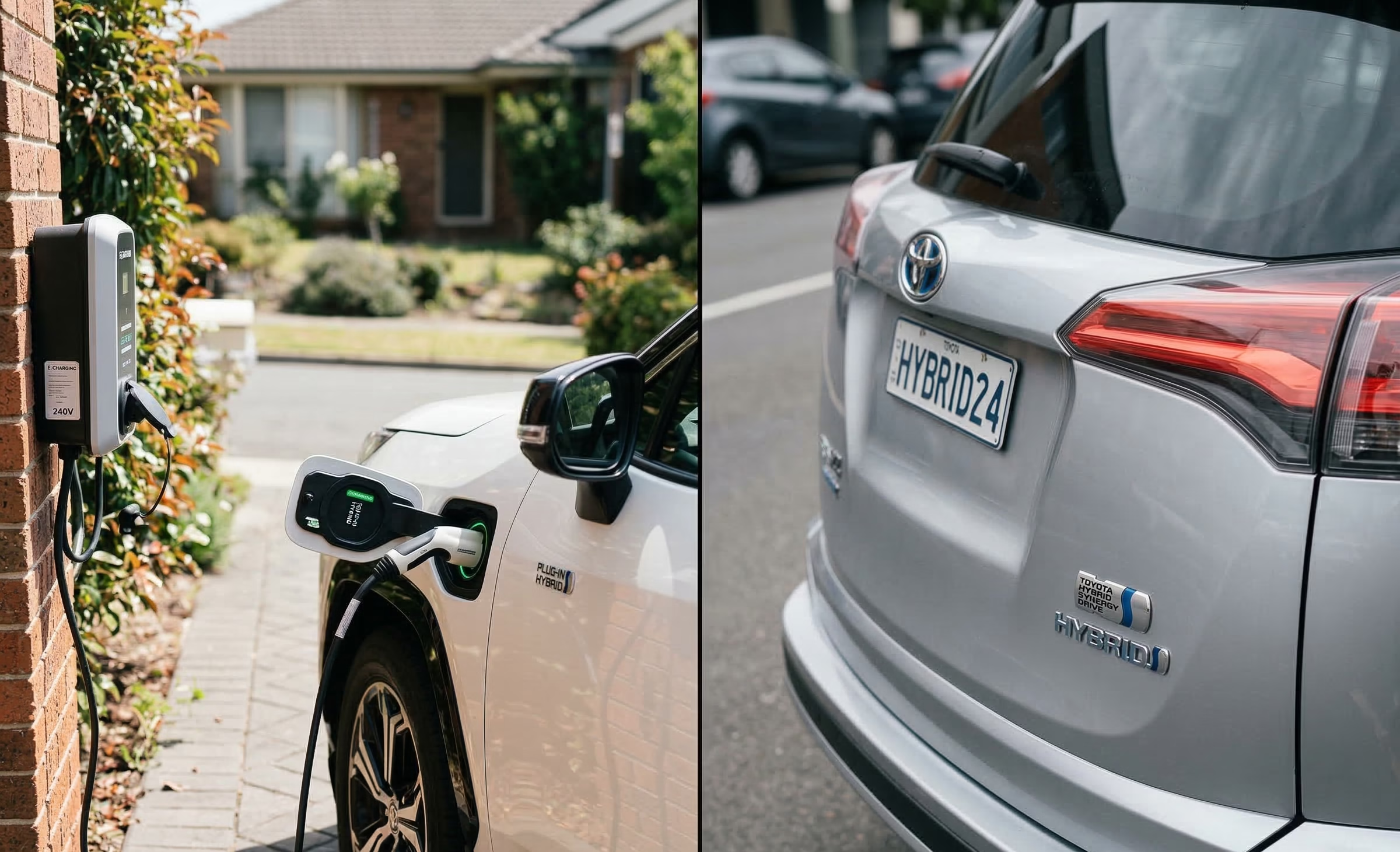
In the wake of the EV tax credit’s expiration, hybrid vehicles saw a notable increase in sales as buyers looked for more affordable electrified alternatives. Hybrids, which combine traditional internal combustion engines with electric motors, continued to benefit from lower upfront costs and widespread availability.
Sales growth for hybrids increased by an estimated 15% in late 2025 as they filled the affordability gap left by the more expensive fully electric models without tax credits. Consumers prioritized fuel economy and reliability in hybrids as a practical stepping stone toward full electrification in future vehicle purchases.
This shift indicates that while EV incentives have a strong influence, hybrids remain a resilient choice amidst market and policy fluctuations.
Automaker Responses and Strategies Post-Tax Credit
Automakers quickly adapted to the new market realities post-tax credit expiration. Ford and GM introduced short-term discounts and attractive leasing options to soften the sales blow. Ford’s CEO Jim Farley indicated that these incentives were designed to maintain momentum while transitioning to new product cycles.
Several manufacturers shifted production forecasts downward for 2026, focusing on models less reliant on federal subsidies and more on consumer appeal. Some companies adjusted their supply chains to manage inventory better and negotiated with suppliers to reduce costs.
This adaptation phase underscores the delicate balance automakers must strike between aggressive electrification goals and market realities influenced by government incentives.
Consumer Behavior Shifts: Affordability and Market Confidence
The expiration of the credit heightened price sensitivity among buyers, leading many to reconsider immediate EV purchases. Leasing gained popularity as consumers sought lower monthly costs amid uncertainty. Prospective buyers became more informed about total cost of ownership, including charging infrastructure, maintenance, and resale values.
Surveys show growing demand for EVs with lower price points and flexible financing. Market confidence is currently cautious but optimistic that technological advances and expanding infrastructure will revive the segment.
Geographic Variation in Impact
The effect of the federal tax credit expiration is uneven across states. Regions with robust local incentives, such as California and New York, experienced less pronounced sales declines. States providing additional rebates and access to HOV lanes retained stronger EV traction.
Conversely, in territories with limited state support and poor charging infrastructure, EV sales dropped more sharply. This regional disparity points to the continued importance of an integrated policy approach that considers both federal and local factors.
Comparison: Federal EV Credit Expiration vs Other Countries’ Incentives
Europe and China have implemented ongoing or expanded EV subsidies, often coupled with stricter emissions regulations. European incentives tend to be more generous in terms of purchase bonuses, tax breaks, and infrastructure investment, resulting in steadier EV adoption.
China’s market benefits from a mix of national and regional subsidies, strong manufacturing capability, and extensive charging networks. The US experience shows that abrupt changes in incentive programs can lead to volatility that other countries have so far managed to avoid.
Environmental and Policy Implications
The expiration of the federal EV credit poses challenges to the US federal government’s emissions targets under the Paris Agreement. With EV adoption slowing, policy makers face pressure to develop new frameworks to encourage cleaner vehicles.
Political debates continue over the scope and funding of future incentives under the current administration, with some advocating for electric vehicle tax credit reinstatements or alternative strategies including infrastructure expansion and manufacturer mandates.
Future Predictions: US EV Market Beyond 2025
Market analysts forecast a gradual rebound in EV sales through 2026, supported by stabilizing prices and expanding charging options. Hybrid vehicles will continue to hold a significant market share, filling the niche for cost-sensitive buyers.
New tax incentives, state-level programs, or innovative financing options may emerge to bolster the sector. Automakers are expected to focus on affordability in upcoming designs and prioritize expanded battery research to drive down costs.
FAQs Section
What vehicles qualified for the federal EV tax credit?
New electric and plug-in hybrid vehicles that met battery size, income, and price criteria qualified for the $7,500 tax credit until September 30, 2025.
Can buyers still claim the tax credit after September 30, 2025?
No, purchases made after that date are no longer eligible for the federal EV tax credit.
Why did EV sales drop so sharply after the tax credit ended?
Without the $7,500 incentive, effective vehicle prices increased, and many buyers delayed purchases, causing a 24% sales decline.
Are hybrids still eligible for EV incentives?
Hybrids are generally not eligible for the federal EV tax credit but benefit from state-level programs and lower cost structures.
How will automakers adapt to the post-tax credit market?
Manufacturers are offering discounts, leasing incentives, and adjusting production forecasts to align with new market conditions.
Quick Takeaways
- The Federal EV Tax Credit was a critical driver for US electric vehicle adoption through 2025.
- Q3 2025 saw a 30% surge in EV sales ahead of the credit expiration.
- Sales plunged 24% in October as incentives ended, revealing market sensitivity.
- Hybrid vehicles rose in popularity as affordable electrified alternatives.
- Automakers implemented short-term discounts and leasing offers to counter sales declines.
- Regional sales impacts varied based on local incentives and infrastructure.
- Future EV growth depends on policy, pricing, and technology innovation.
Also read: Top Automotive Trends and Best-Selling Models in the US – December 2025
Conclusion and Call to Action
The expiration of the Federal EV Tax Credit in late 2025 dramatically reshaped the US automotive landscape. Its removal triggered a sharp spike in electric vehicle demand followed by an equally steep decline, showcasing how integral government incentives are to clean vehicle adoption. Automakers and consumers alike now face a new era where affordability, innovation, and infrastructure will decide the pace of electrification.
As the market recalibrates, hybrids offer a stable option, while future policies could reignite EV momentum. Prospective buyers should stay informed on evolving incentives and dealer specials, while industry watchers monitor automakers’ strategic shifts.
If you’re considering an electric or hybrid vehicle purchase in 2026, understanding these market forces will help you make the best decision. Share your thoughts on how the federal EV tax credit impacted your buying plans and stay tuned for more updates on this dynamic market evolution.
If you found this article informative, please share it on social media and let us know: How has the federal EV tax credit influenced your vehicle choices?
References
- Cox Automotive, November 2025 U.S. New-Vehicle Sales Forecast, https://www.coxautoinc.com
- Reuters, US Motor Vehicle Sales Drop After EV Subsidies Expire, https://www.reuters.com
- Forbes, New Deals Soften Falling Post-Tax Credit EV Sales, https://www.forbes.com
- MotorWatt Blog, Electric Vehicle Sales Soar in 2025 as Tax Credits End, https://motorwatt.com
- WSJ, Automakers Brace for EV Sales Plunge After Tax Credit Expiry, https://www.wsj.com
Editor’s Take: The scramble to claim EV credits before the policy window closed was unlike anything I’ve seen in the US auto market. Dealers told us wait times evaporated overnight. The credit’s impact was real — but whether it built lasting EV habits or just front-loaded demand is the question 2026 will answer. — Lipika Das, CortinasDigiTales

Saikat has been obsessed with cars since he was old enough to recognise the difference between a hatchback and a saloon. With years of experience researching, writing, and living the automotive world, he covers everything from supercar engineering and motorsport history to EV technology and concept car design.
His writing style is direct, enthusiastic, and grounded in real research — no fluff, no filler. When he’s not writing about cars, he’s probably reading about them.